 Reviews



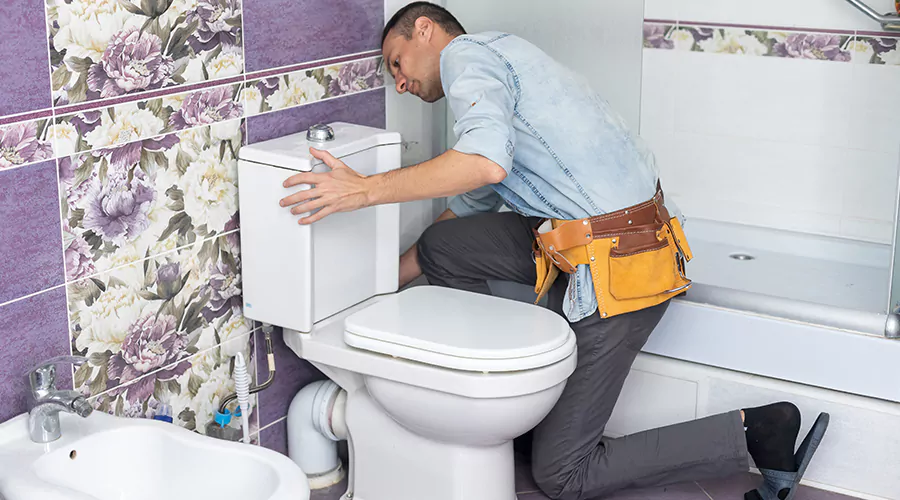
A leaking toilet usually comes from the tank connection, water supply, toilet base or damaged internal seals. Professional leaky toilet repair costs about $100 to $600 in 2026. Finding where the water first appears is the fastest way to identify the failed part before flooring damage begins.
A leaking toilet does not always mean the toilet itself is cracked. Most leaks begin at a seal or connection that can be isolated with a careful visual check.
The timing matters as much as the location. Water that appears only during flushing points toward different parts than water that forms while the toilet sits unused.
Where Does a Toilet Usually Leak From?
A toilet can leak from several separate locations. Water around the base often points toward the drain seal while water beneath the tank can come from bolts or the tank-to-bowl gasket. A wet supply connection usually points toward the valve or supply line.
- Start by drying the entire toilet.
- Then inspect the highest wet point.
- Water follows gravity. A puddle on the floor does not prove that the leak started at the floor.
- Check beneath the tank first.
- Move to the water supply connection next.
- Then inspect the base after a flush.
A crack in the porcelain deserves special attention because tightening hardware will not repair structural damage.
How Does a Toilet Leak Progress?
A toilet leak can begin as an occasional drop before becoming a continuous source of water. The largest repair risk comes when moisture reaches flooring or the structure beneath it. A small plumbing repair can then become a bathroom restoration problem.
| Leak Stage | What You Notice | Likely Concern | Typical 2026 Cost |
|---|---|---|---|
| Early seep | Small isolated drops | Washer or connection | Often low DIY cost |
| Repeating leak | Water returns daily | Failed seal | $100 to $600 |
| Base leak | Water appears after flushing | Wax ring or flange | $50 to $350 by part |
| Water damage | Flooring stays wet | Structural cleanup | Higher than toilet repair |
General toilet repair averages $271 in 2026. The normal reported range is about $150 to $391. Leaky toilet repairs can run from $100 to $600 depending on the failed part.
A leak at the base should not be ignored because water can move beneath finished flooring before the visible puddle becomes large.
What Are the Warning Signs of a Toilet Leak?
A toilet leak often leaves clues before a large puddle develops. Check the fixture when you notice changing water sounds or moisture that repeatedly returns. Testing the location while the toilet is dry gives you more useful information than inspecting an already wet floor.
- Water appears around the toilet after flushing. The drain-side seal needs attention.
- Drops hang below the tank. The leak may start at a tank connection.
- A supply hose feels wet. The water connection may be leaking.
- The floor stays damp between uses. A continuous leak may be present.
- The tank refills without anyone flushing. Water may be escaping internally.
- The toilet rocks when you sit down. Movement can damage the seal at the floor.
- Water tracks down the back of the bowl. The source may be above the visible puddle.
- The ceiling below the bathroom becomes stained. Water may already be passing through the floor.
- The toilet base smells damp. Moisture may be trapped below the fixture.
- A porcelain crack stays wet. The fixture itself can be leaking.
The toilet should stay dry on its exterior during normal operation. Repeating moisture deserves diagnosis even when the amount appears small.
Why Is My Toilet Leaking at the Base?
Water that appears at the base after flushing often points toward the seal between the toilet and the drain flange. A worn wax ring can no longer maintain that seal. A loose fixture can also move enough to weaken the connection beneath the bowl.
- Watch when the water appears.
- A base leak caused by the drain seal often becomes visible during or shortly after flushing.
A wax ring replacement costs about $50 to $200 in 2026 according to national repair data. Flange work costs about $145 to $350 depending on what has failed. Do not keep tightening the floor hardware aggressively. A loose fixture needs proper support. Extra bolt pressure does not repair a damaged drain seal.
Why Is Water Dripping From Under the Tank?
Water below the tank can come from tank hardware or the gasket that connects a two-piece toilet. A fill-valve connection can also leak through the bottom of the tank. The correct repair depends on the exact point where the first drop forms.
- Dry the underside of the tank completely.
- Place dry tissue around each connection.
- Wait several minutes without flushing.
- Then flush once.
A leak that exists before the flush can involve a bolt washer or supply-side connection. Water that appears mainly during flushing can come from the larger tank-to-bowl seal. This distinction prevents replacing unrelated parts.
Can the Water Supply Cause a Toilet Leak?
Yes. The toilet water supply can leak at the shutoff valve or flexible connector. A fill-valve connection underneath the tank can create a similar drip. These leaks can occur even when the toilet has not been flushed because the supply side remains under water pressure.
- Feel the connection with dry tissue.
- Start at the wall valve.
- Move along the flexible hose.
- Then check where the line enters the tank.
Do not tighten an old connection aggressively. A damaged connector should be replaced rather than forced tighter. Water that appears continuously at the supply side needs prompt attention because shutting off the toilet is the fastest way to stop the flow.
Can the Toilet Leak Without Water Reaching the Floor?
Yes. A toilet can leak internally from the tank into the bowl without making the floor wet. A worn flapper or flush-valve seal can let tank water escape slowly. The fill valve then replaces that lost water and the toilet may refill periodically by itself.
- Listen while the toilet is unused.
- Unexpected refill sounds are a useful clue.
- Add several drops of food coloring to the tank.
- Do not flush.
- Wait about 15 to 20 minutes.
- Colored water that reaches the bowl shows that tank water is crossing the flush seal.
This test isolates an internal leak without removing the toilet.
What Safe Leak Test Can You Do Today?
The simplest toilet leak test uses dry paper towels to locate the first wet connection. Dry the fixture completely before starting. Then place fresh paper at suspected points. Check the toilet before flushing and repeat immediately after one flush.
- Start beneath the tank.
- Check the supply line.
- Place paper around the floor connection.
- Wait several minutes.
- Record which area becomes wet first.
- Then flush once.
- Check the same locations again.
A leak that begins only after flushing has a different cause from one that develops while the toilet sits idle. This test costs almost nothing and prevents guesswork.
When Should You Call a Professional?
Professional help makes sense when the leak comes from beneath the toilet or the porcelain is cracked. It is also appropriate when water reaches flooring or the source cannot be isolated. Removing a toilet exposes the drain connection and requires correct resealing before the fixture returns to use.
Leaky toilet repair costs about $100 to $600 in 2026. Wax ring replacement runs about $50 to $200. Flange repairs can reach roughly $350.
Call for deeper diagnosis when:
- Water appears beneath the toilet after every flush.
- The toilet rocks on the floor.
- Porcelain has a visible crack.
- The shutoff valve itself leaks.
- Water reaches the ceiling below.
- Several replacement seals have already failed.
A drain-side leak deserves faster attention than a harmless condensation pattern because wastewater can affect materials beneath the fixture.
How Can You Prevent Future Toilet Leaks?
Regular inspection catches seal problems before enough water escapes to damage the room. Check visible connections every few months and respond when the fixture starts moving. Keeping the toilet stable also protects the seal between the bowl and the floor.
- Look behind the toilet during routine cleaning.
- Check for rust around hardware.
- Feel the supply line for moisture.
- Watch for movement at the base.
- Listen for unexpected tank refilling.
- Do not lean heavy objects against the tank.
Replacing a small worn component early costs less than repairing flooring after a long leak.
Conclusion
A leaking toilet is easiest to diagnose when you identify where the water appears first and when the leak starts. Dry the fixture before testing. Check the supply side and tank connections before assuming the base has failed. Water that appears during flushing often points toward a seal. If water reaches flooring or damaged porcelain is involved, professional diagnosis can prevent a small leak from becoming a larger repair.
Frequently Asked Questions
Can condensation look like a toilet leak?
Yes. Moisture can form on a cold tank in humid conditions. Dry the tank and watch whether droplets form evenly across the surface rather than from one connection.
Can a loose toilet cause a leak?
Yes. Repeated movement can damage the seal between the toilet and drain flange.
Why does my toilet leak only when flushed?
A leak triggered by flushing can involve the tank-to-bowl gasket or the drain seal beneath the toilet.
Can a cracked toilet be repaired?
A structural porcelain crack usually makes replacement safer than attempting to seal the damaged fixture.
Can a toilet leak raise the water bill?
Yes. Internal tank leaks can run continuously even when no water reaches the bathroom floor.